
Remote hiking in Makira Natural Park to see inland wildlife, then return to luxury on the beach and see local culture and Farankaraina wildlife
Day 1: Transfer to boat - river boat ride - hike to Makira

Your guide will meet you at the airport and transfer you to the Ankompy marina. Enjoy the 2-3 hour boat ride along the Tenambala river to Andaparaty Village, as your guide points out the locals' rice, clove and coffee fields. Porters will join us to carry your luggage as we hike 20 minutes to the Antsahabe Forest and then another hour uphill to reach Simpona Lodge.
Overnight in a bungalow or sheltered tent (your choice) at Simpona Ecolodge.
Day 2: Nature walk

With luck, the trackers will have found the rare silky sifaka, which are only found in this area of the Antongil Bay. Watch the antics of these snowy white lemurs as they hang upside down and swing from tree to tree.
We'll also look for beautiful birds such as the red-breasted coua and if we're lucky, the endangered helmet vanga or Bernier's vanga. Cool off and relax at the watefall, and look for white-fronted brown lemurs on the return to the lodge for lunch.
Relax in the afternoon, and then head out for a night walk, looking for chameleons or a web-casting spider, which throws its web to catch its prey.
Day 3: Nature walk

Spend a second day walking on some of the 10km trails in the area, and visit the spectacular waterfall.
In the evening, look for the nocturnal wildlife such as geckos and frogs, and mouse, dwarf and bamboo lemurs which can often be seen right around the camp.
Day 4: Hike out of Makira, transfer to Aye-Aye Forest Camp

After breakfast, we hike out and take the boat back to Ankompy, a transfer by car to the marina, for your onward journey to the Aye-Aye Forest Camp.
During the 45 minute boat ride on the river, look out for the malachite kingfisher, red fody or grey heron. After a 15-minute walk, you will be greeted at the camp with a welcome drink, and orientation session. Unpack, enjoy a stroll or even a swim at the beach, before dinner. As the sun sets, head out for a night walk, listening to the chorus of frogs and the scops owls calling each other. Look for dwarf and mouse lemurs, and of course the aye-aye.
Day 5: Birding, lemurs and Village visit

Today we head into the 3000ha Farankaraina forest. The Aye-Aye Forest Camp maintains a network of 10km of trails, each with their own characteristics. Birders may want to head out at sunrise to look for the short-legged ground roller, red-breasted coua or the Madagascar wood-rail and return for a late breakfast. Or, after a hearty breakfast, look for white-fronted brown lemurs and one of the two groups of red-ruffed lemurs. Your guide will be ready at whatever time you would like to leave.

In the afternoon, travel in a pirogue (a local, wooden canoe) to visit the village of Ambodivohangy. A farmer will explain how they grow local crops (vanilla, cloves, peppers, papaya, breadfruit, jackfruit, cacao, rice,...) and then the Women's Association will perform the toka toka, and other traditional dances. Make sure you bring some Ariary to spend on locally made crafts.
In the evening, walk along the beach looking up at the southern hemisphere stars, but keep an eye on the ground as the many ghost crabs skitter along the beach. Occasionally a fossa will make a fleeting appearance.
Day 6: Nosy Mangabe and Nosy Fanihy, and night walk

Head out early to hear the cacophony and watch the activity of the flying foxes nesting in the trees at Nosy Fanihy. Then cross the short distance to Nosy Mangabe, the island jewel of Masoala National Park. The black and white ruffed lemurs are only found on this island in the Antongil Bay. Your guide may also spot a Brookesia peyrierasi, the second smallest chameleon species. Enjoy a picnic lunch packed from our camp, followed by exploring more trails, looking for a well-chamouflaged leaf-tailed gecko, or a pygmy kingfisher.

Head back to the camp mid-afternoon, enjoy a swim or a nap, and then enjoy another night walk where your flashlight might catch a nose-horned chameleon or the glow from the eyes of a woolly lemur, and have another chance at finding an aye-aye.
Day 7: Early birding or swim, transfer to Maroantsetra
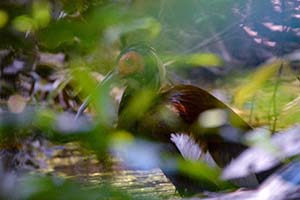
Early risers may take advantage of one last walk in the forest to spot blue coua, Malagasy white eye or a Madagascar ibis. Or enjoy one last swim in the ocean.
After breakfast, once again enjoy the quiet river transfer back to Maroantsetra and then spend your last afternoon in a modern hotel overlooking the bustling commerce in the streets and along the river.
Day 8: Airport transfer

Flights to Antananarivo are generally in the late morning. Transfers will be arranged by the hotel.
There is an option to stay the last night at the Aye-Aye Forest Camp if you would like to take enjoy the forest and the beach, and benefit from one extra night walk on Day 7. In this case you would leave the Aye-Aye Forest Camp early in the morning, and be transferred directly to the airport.